 The first weekday New Mexico Rail Runner Express train departs the Downtown Albuquerque Station at 4:32 a.m. To ensure the train is safe and ready for passengers on that early morning run, Locomotive Engineer Jerome Armijo arrives at the railyard a full hour earlier to perform inspections, safety checks, and more.
Here’s a behind-the-scenes look at what it takes for a Rail Runner Engineer to get passengers to their destination safely and on time each day.
Safety Checks and Inspections
“I’m morning crew,” says Armijo, who has occupied the Engineer seat since May of 2016, and has worked on the Rail Runner for almost 13 years. “The earliest start time is 3:30 a.m.”
It’s usually dark when Armijo arrives at the railyard in Downtown Albuquerque. The first thing he does is get into uniform – a blue collared polo shirt and hat. Then he heads over to the crew room.
“The crew room is where my Conductor and I have a job briefing over the territory for the day,” says Armijo. They cover things that might impact their speed or operations, such as work being done on or near the tracks or signal malfunctions.
After the briefing they head down to the yard. “I do an exterior inspection. Then I inspect the locomotive, testing all the bells, headlights, and making sure the safety seals are in place,” he says.
After he inspects the locomotive, Armijo moves down to the cab car and performs the same checks there, followed by a break test to make sure the breaks are operating properly.
“There’s lots of checking to make sure these massive things made of steel make it down the rail safely,” says Armijo. “Then we depart the yard and make our way on to the main track.”
Operating the Train
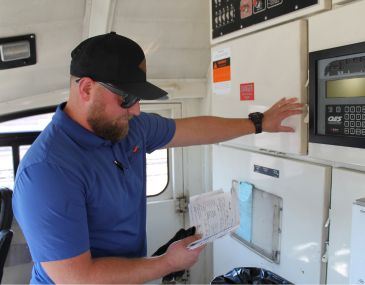 Armijo says that an Engineer will typically be running the train between six and 11 hours a shift. Throughout that time, they’re constantly on alert, monitoring the speed, air pressure, signals, and more.
“The main thing I’m doing is making sure I’m at the correct speed. I also make sure that each crossing is working correctly when I go through. I whistle where I need to, or, if it’s a quiet zone, I’ll have my bells on,” he says.
Engineers are always on the lookout for trespassers and other things - like animals - that are on or too close to the tracks. They stay in contact with NMRX Dispatch throughout the day regarding these situations.
Tying it Down
The end of a shift takes just as much work as the beginning.
“If we’re ending our shift and yarding our train, the Conductor will make sure we’re lined into the yard on the correct track,” says Armijo.
He also works closely with Mechanical. “They will let us know where they would like us to bring in the train for service,” he says.
Mechanical hops on board to service the train, clean the restrooms, and will possibly have the crew check couplers or swap locomotives.
After these tasks are complete, Armijo and the crew will park on the track and ‘tie it down’, performing a roll test to make sure the train doesn’t roll at all before they’re done with the set.
Sunrises and Snow
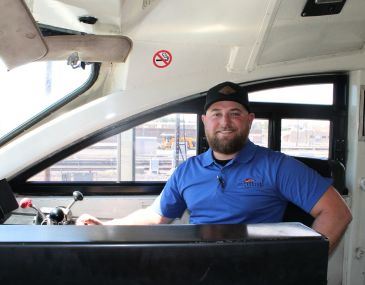 When asked about the best part of his job, Armijo responds, “Sunrises are the best! I get to see some pretty amazing sunrises almost every morning.”
Armijo also says that operating the train in weather – especially snow – is another thing he really enjoys. “I like it when there’s weather. Mostly when it’s snowing, but any sort of weather makes it interesting. The weather can make a huge difference in how you stop the train.” It’s a challenge he says he welcomes.
According to Armijo, the most challenging part of being an Engineer is also the same thing he likes about it – the challenge of operating in weather or if something out of the ordinary happens. “You have to think about how to solve a problem at the same time that you’re operating the train, and you may be going 79 miles per hour,” he says. “People are trying to get to work or their destinations, so I want to do everything as quickly but as safely as possible.”
Always Expect a Train
When asked about an important safety tip that he would like to share with the public, Armijo responded, “People don’t expect to see a train on the tracks. But they should. I see this often, especially in heavily trafficked areas. Crossing gates are coming down and ringing, lights are flashing, and people are still on the tracks. Give yourself some distance from the train. At stations, too. I recommend standing as far back as possible.”
Give Him a Wave!
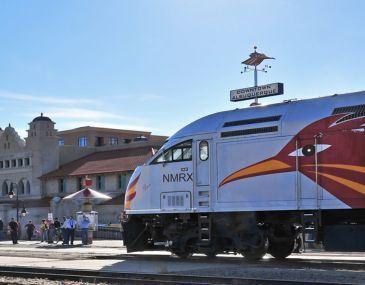 Armijo and all of the Rail Runner Engineers and crew work tirelessly to ensure passenger safety while getting people to their destinations. Armijo says he enjoys talking to the passengers and seeing the people that are watching the train as it goes by.
“When people say thank you, it still makes my day,” he says. “And it’s great when people, especially little kids, wave at you.”
Make sure to give the Engineer a wave the next time you see the Rail Runner go by or stop and say hi if you see Armijo and any of the other crew members at a station.
